The Evolution of the Modern Gentleman - 2010 to 2026
The 2010s to 2026 transformed menswear as streetwear, digital culture and quieter luxury reshaped how modern gentlemen dress, with ZOO Fashions evolving by championing influential designers before they hit the mainstream. Across four decades of change, its core philosophy has remained the same: curating what matters and helping customers build confident, individual style.
Author:
David - Lead Buyer & Curator at ZOO Fashions
Expertise: Designer Intent, Shifting Luxury Paradigms and Investment Curation. With over two decades of securing ZOO’s Day 1 brand accounts, David curates collections by identifying the designers who dictate the cultural zeitgeist, bridging the gap between high-fashion tailoring and street-level subversion.
The 80s, 90s and Noughties brought an age of discovery, excess, independence, refinement and the emergence of a genuinely modern male silhouette across three defining decades. The 2010s changed the game again and almost flipped everything on its head.
The intersection of fashion and the street became inextricably intertwined. Sneakers became luxury, T-shirts became statements, the restaurant became the new social club and the internet accelerated everything as social media turned fashion from something you discovered into something you could watch, share and consume almost instantaneously.
The modern gentleman was changing again, and as had been the case through the previous three decades, so was ZOO.
Moving Out Of The Noughties Into New Territory
The 2010s began much as the Noughties had ended. Prada, Gucci, D&G and the large established houses remained central to the conversation across the industry, yet the ZOO team were already looking towards the next horizon. One of the first significant arrivals of the decade was the reintroduction of Valentino Garavani into the ZOO portfolio, Valentino brought something different. A style, panache and elegance that added another layer to the intellectual modernity of Prada and the Italian confidence of Gucci.
The ZOO manifesto was diversification and to understand multiple languages of what luxury represented.
Riccardo Tisci's Givenchy arrived with an aggressive confrontational Parisian attitude - religious reference, graphic imagery and the infamous Rottweiler redefining what a Parisian luxury house could look and feel like. Alongside it, Balenciaga under Nicolas Ghesquière rolled out the Racerunner and Arena leather sneakers which disappeared onto the streets as soon as they hit the shelves. Being a day one account of the brand, ZOO became a hub to cop the footwear. Things felt more chaotic and edgy and that word - STREET - probably defined the moment and decade better than any other.
Fashion was no longer something that existed on runway and then filtered down. Luxury houses were looking to the streetwear scene and the sub-culture movements for inspiration and all of a sudden the street had become part of the runway.
Elevated sneakers were beginning to replace the traditional day shoe. The sleek, slim Hedi Slimane silhouette that had dominated the 2000s was still present, but the world around it was becoming more relaxed and so were the ZOO customers.
Nightclubs became fortnightly, restaurants became part of the landscape, pre-drinks part of the ritual, and day parties an event in the calendar. Social geography and cultural norms were changing and the wardrobe was changing with it.
Casual but not careless was the mantra. Effortless cool the vibe. Smart shirts, rigid tailoring and polished shoes started to give way to the contemporary flow of graphic t-shirts, rip and repair denim and pristine kicks. Deliberate imperfection was the new perfection and luxury began to embrace this with distressed denim, worn leather, oversized graphics, exaggerated proportions, and a new generation of designers understood exactly where the customer was heading.
The Designers
Demna. Virgil. Marcelo Burlon. Mike Amiri. The new princes of fashion who understood music, nightlife, art, celebrity and the internet because they were products of those worlds themselves. They didn’t think about simply designing clothes but constructing worlds and ecosystems that these clothes lived in.
Once again, ZOO was there. Marcelo Burlon was injected into the mix for the East London flagship. Coming out of Milan's nightlife, photography, DJ culture and fashion orbit, his work was a product of the new decade rather than an interpretation of the old one. His imagery was immediately recognisable and designed to live beyond the catwalk.
And then there was Balenciaga and Demna and a double down on statement led, provocative and altogether experimental street led high fashion that exploded ZOO as a supplier of the most in demand product to anyone who could get their hands on it. The instinct to recognise that something might become important before the rest of the industry had was paying off.
As a counterbalance Prada kept doing Prada things. Important because not everything needed to be reinvented every season. Gucci became maximalist again, drawing on their archives to reinterpret and make it relevant again, whilst Hedi Slimane returned at the helm of Saint Laurent (Sans Yves) with impossibly slim silhouettes, rock 'n' roll, Los Angeles, thrift-store references and that particular brand of elegant decadence that made everything look as though it had been discovered rather than designed.
The decade would not be complete without reference to Christian Louboutin. ZOO became one of the first independent UK destinations for the men's collection, introducing the Red Sole into a very different environment from the traditional luxury footwear establishment. Again we were there, to take something significant, understand it, interpret it and show a new customer base why it belongs.
It was a heady mix. Prada next to Givenchy, Gucci alongside Saint Laurent, Balenciaga with Louboutin, Off-White, Moncler and Amiri. A managed chaos edited so that every garment had earned its place. No other store could reproduce this visual language, the atmosphere and the conversations it generated. They watched, they copied, but they were always a step behind.

The Digital World and the Move Online
Then ZOOFASHIONS.COM arrived. The physical flagship store had always been the centre of the conversation, but now the conversation could travel to destinations on a global scale, taking East London to Asia, America and beyond. The edits and interpretations unique to ZOO were now reaching individuals who had never had the opportunity to access this type of brand mix.
It was another huge moment, and the network of international partners and customers grew exponentially as ZOO became renowned as a leader in the space. But the principle hadn't changed, If anything it grew stronger. We were still looking, still finding, still editing, still asking the same question: Why does this matter? The difference was that the world now had access to everything and when everyone has access to everything, curation becomes more important, not less.

The 2020s A Decade Like No Other
Then came the 2020s and for a moment everything stopped. COVID didn’t just close stores, it irreversibly transformed culture. Nightlife disappeared, restaurants closed, travel stopped and events vanished, never to return. The rhythm of social life was put on hold and when it began to slowly move again, things had changed.
After years of logo mania, hype drops, collaborations and relentless streetwear cycles, there was a noticeable return towards something cleaner, quieter and more considered. There was a clarity that only comes from over exposure and a need for substance and purpose became paramount. This is where the 2020s have become particularly interesting as conversations between eras and aesthetics dominate and from this, collaborations have become more important.
Old houses have found new modern partners, sportswear and luxury have cross pollinated. Casablanca brought a new interpretation of leisure, glamour, travel and Mediterranean fantasy. Stone Island doubled down on it’s position as technical innovators, with a subsequent cultural credibility explosion. Los Angeles found its feet again with a modern cohort of brands like Rhude and Nahmias leading the charge, underpinned by the rise of Amiri from cult proposition into a genuine fashion force.
Again, the story wasn't simply about the product, It was about evolution. Could a designer retain the DNA that made a brand interesting while allowing it to grow, could something remain authentic while becoming global, could new brands with an approach not mired in ‘luxury’ dogma infiltrate the closed shop of ‘houses’ dominated by the European giants?
These are the type of questions ZOO has been asking for decades and which have gone full circle, bringing us to 2026. Forty-four years after ZOO first opened its doors, the customer has changed beyond recognition, the way he discovers brands has changed, the way he buys has changed, the platforms have changed and the brand mix as ever, has changed.
But…the fundamental question hasn't.

What's Next?
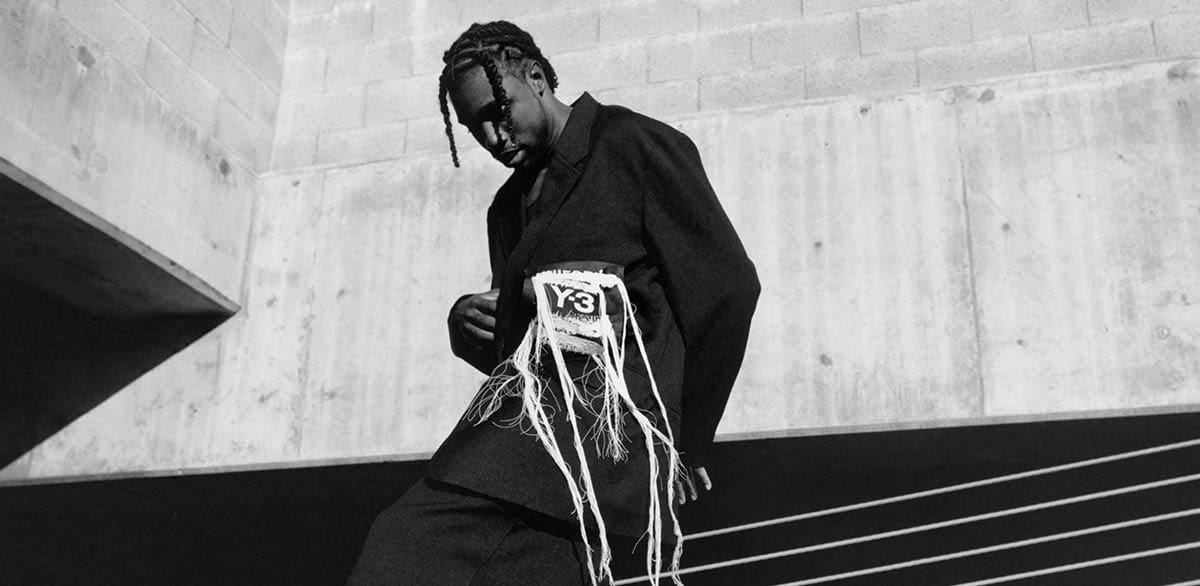
Today the answer might be Saint Laurent, AMIRI, Christian Louboutin, Stone Island, Y-3, Casablanca, Nahmias, Willy Chavarria, Song for the Mute or something we haven't yet encountered. The names will change but the instinct will always remain.
The remit to look early, harder and beyond the obvious. Understanding the designers, the culture and the customer. The modern gentleman has changed dramatically in these forty-four years. The man who once arrived looking for the loudest Versace shirt may now be looking for an understated Yohji jacket. The boy who discovered Prada America's Cups might now be buying an archival pair because he understands what they represented. The teenager discovering AMIRI today may, twenty years from now, be explaining to someone else why those early pieces mattered.
Perhaps that is the real evolution. The modern gentleman is no longer defined by one silhouette, designer or logo. Tailoring works with sneakers, technical outerwear with knitwear, vintage with contemporary, Stoney with Saint Laurent. The boundaries and categories have blurred so much that they are no longer perceptible. Style has replaced uniforms and the modern gentleman is the author of his own style.
Which brings us back to where ZOO began. Providing choice, independence and confidence. To give someone the courage to wear something because they understand it, not because it was ‘fashionable’. The world, fashion and the customer has changed, but maybe not as much as we may think as the same principles have run through the last 40 years to the modern day.
Finding what matters, understanding why it matters and then translating this to the customer. What was true in 1982, was true in 1992, 2002, 2012 and now in 2026. The modern Gentleman has evolved and with it so has ZOO, ready for the next 40 years of the fashion rollercoaster.
FAQs
1. Why did luxury fashion shift from tailored menswear to streetwear in the 2010s?
Street culture, music and digital media began influencing luxury fashion more directly. Sneakers, graphic T-shirts, relaxed denim and oversized silhouettes became part of luxury, creating a more casual but still considered approach to menswear.
2. Which 2010s luxury brands are considered the best investment pieces today?
Rather than focusing purely on financial value, ZOO looks for pieces with lasting cultural and design significance. Prada, Saint Laurent, Balenciaga, Givenchy, Gucci, Louboutin, Off-White and AMIRI all represent important moments in modern menswear.
3. How can I recreate the modern gentleman style by mixing brands like Saint Laurent, AMIRI and Stone Island?
Mix different influences rather than following one uniform. Pair Saint Laurent's refined rock aesthetic with AMIRI's modern luxury and Stone Island's technical outerwear, then balance them with tailoring, knitwear, vintage or sneakers.
4. What makes a luxury fashion retailer like ZOO different from buying directly from designer brands?
ZOO's difference is curation. Rather than representing one designer's vision, ZOO brings influential brands together, identifies what matters and helps customers understand how different pieces can work together to create individual style.