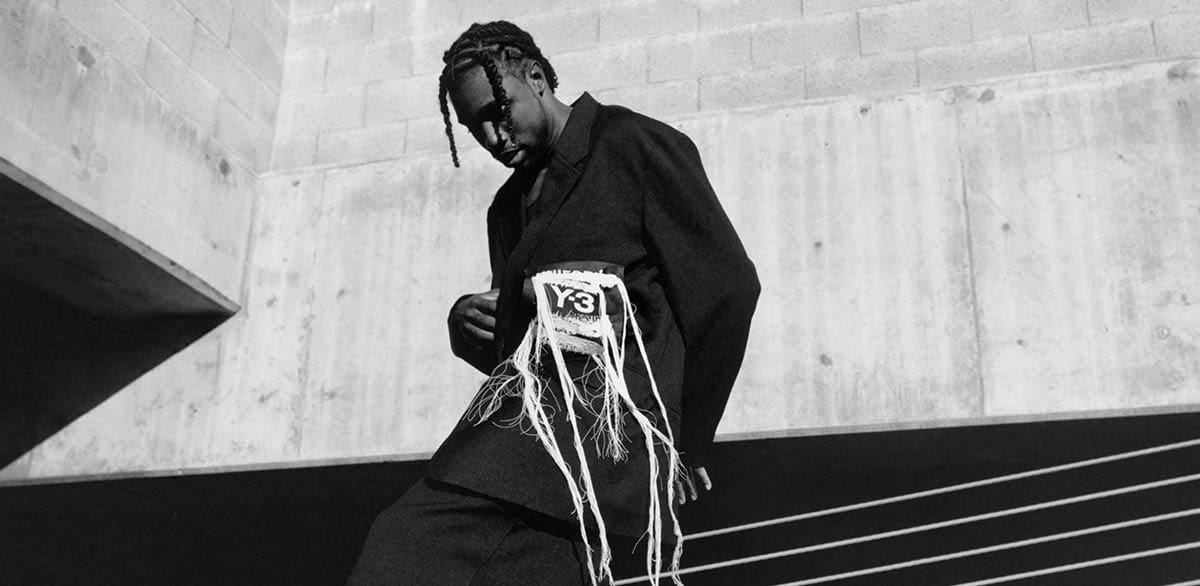
The Modern Gentleman
How the 1980s, 1990s and 2000s rewrote the rules of men's style—and shaped the ZOO man.
Since 1982, ZOO Fashions has evolved alongside men's style, using fashion as a tool for identity rather than status. By championing pioneering designers and staying ahead of cultural shifts, ZOO helped shape the modern gentleman; someone defined not by labels, but by confident, informed personal style.
Author:
David - Lead Buyer & Curator at ZOO Fashions
Expertise: Designer Intent, Shifting Luxury Paradigms and Investment Curation. With over two decades of securing ZOO’s Day 1 brand accounts, David curates collections by identifying the designers who dictate the cultural zeitgeist, bridging the gap between high-fashion tailoring and street-level subversion.
There is a temptation, when looking back at fashion, to organise history by designers, collections and most commonly seasons. It is a universal doctrine to order and categorise in the industry and we could do that here. We could run through Miyake, Yamamoto, Gaultier, Margiela, Prada, Gucci and Dior Homme, all of their key pieces and iconic seasons and the countless pieces that have passed through ZOO's doors over three decades.
However, that would miss the point and the essence of this piece, because the evolution of the modern gentleman has never been simply about the clothes. It is the person who interprets and wears them that is most pertinent - the generations of men discovering that what they wore could say something about who they were, where they were going and, occasionally, exactly who they didn't want to be.
Throughout this time, we have been on the inside, not observing from a distance, but in the thick of it all. From our beginning in 1982, we have been at the intersection of fashion, music, nightlife, football, youth culture, ambition and an increasingly confident new Britain. We have watched our customers change. We have watched their expectations change, and through that process, we have changed with them.
Sometimes we followed but more often than not, we were already waiting for them.
1982 - ZOO Arrives
ZOO was founded in 1982, at a moment when Britain was changing at remarkable speed. Thatcherism was creating a new sense of ambition and aspiration. The City was expanding and wealth was moving outwards from the traditional centres of London and beginning to find its way across the South East and beyond. A new consumer confidence had emerged and with it came something fashion had always understood instinctively.
People wanted to be identifiable. Brands began to matter, and not just because of the price tag, but because they represented an identity. Wearing the right label could tell people where you had been, what music you listened to, which clubs you went to, who your friends were, and increasingly, where you thought you were going.
For a fledgling ZOO, with huge ambition and a vision that was always considerably larger than its physical footprint, it was a perfect moment and perhaps the perfect place.
East London. We were bringing something of the West End to the heart of London’s East and the expanding population and that juxtaposition became part of ZOO's DNA. You could walk through our doors and find yourself somewhere else entirely. Japanese minimalism sat beside European excess.
Issey Miyake, Yohji Yamamoto, Comme des Garçons and Matsuda occupied the same floor as Moschino, Versace, Massimo Osti, Reporter and Claude Montana.
Diversification was the remit. The customer could be flamboyant or restrained, technical or tailored, minimal or maximal. A club kid, a businessman, a footballer, a musician, a face, a double-hard bastard or some combination of all of the above.
The wardrobe was becoming a language, and ZOO was was the tutor, educating people how to speak it.

The 80s, When Everything Collided
If you weren’t there it’s difficult to explain the energy of the 1980s without making it sound slightly ridiculous.
Duran Duran, Five Star, Faces nightclub, Yuppies, The City, Football, Raves, Designer labels, Double-hard gangsters, Money, Music, Sex, Ambition. Everything seemed to be turned up a few notches and fashion was right there with it.
This was the decade when brands became cultural currency. A label could become an identity - A jacket a pair of shoes, a logo or a name could carry an extraordinary amount of social information and more often than not a cue that you were making moves. yet interspersed amongst this decadence was an air of experimentation. Men, in particular, were discovering that masculinity did not have to mean uniformity. The modern gentleman had begun to emerge, increasingly conscious of his own image, his own taste and his own ability to construct it.
At the epicentre was ZOO. The ZOO Keeper and his merry band of fashion advisors were not standing behind a counter waiting for somebody to ask what was new. They were out there and actively looking. What was happening in London, in Europe, in Japan, on the streets, in the clubs, at those individuals doing something different - and then bringing it all back to East London.

The ZOO Keeper
The ZOO Keeper and founder of ZOO became, in many ways, the customer's guide through this increasingly complicated world. Having access to great clothes was one thing, yet knowing what to do with them was another. There was no feed on tap for style inspiration, no ‘influencers’ or algorithms pumping you the latest looks. You had to find it, and ZOO became one of the surest bets as place where you could discover it.
Customers would arrive looking for one thing and leave with something entirely different. Something introduced or discovered for the first time. A relationship where they knew the ZOO team would have not just what they wanted, but what they needed. These relationships were fundamental to ZOO as the store cemented itself as the de-facto curator, a position and distinction that would become increasingly important as the decades progressed.

The 90s - From Excess To Edit
The 1990s began with much of the energy of the previous decade still burning brightly, yet something was changing, as our customer base matured and tastes began to evolve. The man who had discovered fashion in the 80s was now older, more confident and considerably more demanding. He still wanted style, but also with refinement, independence and sophistication.
C.P. Company became an important part of that story. Clean, functional, considered and perfectly suited to the daytime. It offered an alternative kind of authority. Cotton Belt shirting brought another layer, Junior Gaultier arrived, and then Jean Paul Gaultier himself became part of the increasingly heady mix of fashion, music and club culture. His clothes were not simply being worn; they were being performed, with cultural icons such as Madonna helping push his vision into the mainstream.
Versace and Moschino evolved and the Japanese quartet remained completely unashamed of their own language. Their drama was in the construction, the proportion, the fabric and the intelligence of the garment. For the ZOO customer, this was an education. Style didn't have to mean decoration as restraint, silhouette and an understated knowing became the new ‘look’.

Belgium Arrives
The period also saw a seismic shift as the now heralded ‘Antwerp Six’ burst onto the scene with a completely new language. Dries Van Noten, Ann Demeulemeester, Bikkembergs, bringing another form of intellectualism to menswear. Clothes became increasingly concerned with construction, deconstruction, proportion, imperfection and the idea behind the garment. It was another step in the evolution of the ZOO customer.
The question transitioned from Does this look good? to Why does this look like this? The boundaries were beginning to disappear as the street started to discover luxury and luxury started to discover the street, and ZOO stood at the intersection of this new era.

PRADA And The New Wave
The iconic entry of Prada signalled yet another shift, representing a new kind of luxury. Modern, restrained. technical and utterly desirable. Prada Linea Rossa followed suit, pushing that language into sport, technology and everyday life. Then came Tom Ford at Gucci and another pivot on the interpretation of what luxury could be. The ZOO customer had demanded more and the ZOO Keeper was delivering. That was the relationship - They wanted the next thing, we went looking for it and bought it East London.
When London Became Local
Through this journey, something else happened. ZOO was no longer simply an East London destination. The city had become local as customers from across the UK journeyed down to experience the vibe and shop at the store that delivered the newest brands before anyone else. ZOO was firmly on the map as Premier League footballers made it their destination. DJs came, musicians came, people from the worlds of entertainment and popular culture came - all looking for something they couldn't necessarily find elsewhere.
Will Smith, George Michael, Robbie Williams and others whose names, stories and reasons for coming through the door belong to ZOO's own history. But what is important to remember is that the arrival of celebrities didn't change ZOO or the ethos of the store. The OG faces were still there, the core customers from the 80s still made it their no. 1 stop and ZOO retained its integrity as a cultural melting pot where celebrities came if they were fortunate enough to find out about it.
2000s - The New Man
Then came the new millennium. A fresh start perhaps, but for ZOO it was more evolutionary than revolutionary. The foundations laid over the previous two decades set the scene for another transformation, epitomised no more than by Hedi Slimane. Fresh from his successful tenure at Yves Saint Laurent, Slimane took the reins of Dior Homme and launched a dedicated menswear vision that felt completely different.
The new man was thin, sharp, controlled and Rock 'n' Roll. The silhouette changed and, as always, ZOO was there. As opposed to simply putting Dior Homme on the rail, our role again was to interpret the new vision for our clientele.
To educate, advise and persuade. ZOO once again dictated the new narrative, across East London, into the South East and then further afield. There was imitation and plagiarism on the theme, yet no one could copy the narrative, the atmosphere and most importantly the instinct.
The Modern Gentleman
So what actually changed? Well, quite a lot! The 1980s man wanted to be seen. The 1990s man wanted to be recognised for his taste and by the beginning of the 2000s, he increasingly wanted to understand the culture behind it.
The modern gentleman became more informed, independent and demanding and much less willing to accept somebody else's definition of what he should look like. Wardrobe’s became a form of personal authorship and this evolution was reflected in everything ZOO did. From the Japanese minimalism and Italian excess, through Belgian deconstruction to the new tailoring.
From footballers and musicians and club culture to the City. From the West End to East London and eventually from East London to the world. We didn't always know exactly where the story was going, but we knew enough to recognise when something mattered.

Still East London
Through three decades of change, hundreds of designers, thousands of garments and countless customers one thing has remained remarkably constant. The door.
The customer walking through it, the conversations and discussions, the recommendations, occasional disagreements, the discovery and the moments when somebody tried something they had never considered before and looked in the mirror and said: Yes. That's me.
That is the evolution of the modern gentleman. Not a straight line or prescribed look. Not a list of brands and names, but the gradual discovery of independence and confidence to make your own choices. The knowledge to understand why they matter and the instinct to know when something is genuinely different.
For ZOO, that journey began in 1982 in East London and despite everything that has changed since, perhaps the most important part of the story hasn't changed at all.
We are still looking for what's next, curating, advising and dictating - all from East London. We’ve always believed that the best dressed man in the room isn't necessarily the one wearing the most recognisable label. He's the one who knows why he chose it, and, ideally, got there first.
FAQs
1. What makes ZOO's designer collections different from other luxury retailers?
We curate brands based on cultural relevance, craftsmanship, and longevity—not just popularity—bringing together established icons and emerging designers.
2. How do I choose the right designer brand for my style?
Our approach is to match you with pieces that suit your lifestyle and personal taste, whether you prefer understated tailoring, technical outerwear, or statement fashion.
3. Are these pieces worth investing in?
Many of our collections are chosen for their quality, timeless design, and lasting appeal, making them wardrobe investments rather than seasonal purchases.
4. Which designer brands are best for building a versatile wardrobe?
Brands like Prada, C.P. Company, Yohji Yamamoto, and Dries Van Noten offer versatile pieces that balance everyday wear with distinctive design.
5. I'm new to designer fashion, where should I start?
Start with a signature piece, such as a jacket, knitwear, or tailored trousers, and build your wardrobe around timeless, well-made essentials that reflect your own style.