Day One
On Authorship, Conviction and Recognising Tomorrow's History
ZOO’s “Day One” philosophy has developed over 40 years through identifying and backing distinctive designers and cultural movements before they achieve consensus, using instinct, authenticity, and an evolving archive to preserve the origins of fashion’s most influential ideas.
Author:
David - Lead Buyer & Curator at ZOO Fashions
Expertise: Designer Intent, Shifting Luxury Paradigms and Investment Curation. With over two decades of securing ZOO’s Day 1 brand accounts, David curates collections by identifying the designers who dictate the cultural zeitgeist, bridging the gap between high-fashion tailoring and street-level subversion.

The Recognition
If Hedi Slimane provides perhaps the clearest example of what ‘Day One’ means, he was by no means the beginning.
Long before Dior Homme, ZOO had developed an instinct for designers whose work challenged the accepted vocabulary of fashion. In the 1980s, Yohji Yamamoto, Issey Miyake and Comme des Garçons represented very different approaches to design, but they shared a willingness to question assumptions about what clothing was supposed to do, how it should move and perhaps most importantly, how it should make the wearer feel.
Their collections engendered a different kind of attention deeper than reducible logos, trends or recognisable silhouettes. That mattered to us as we sought new and interesting brand partners that would provide ideas for customers to question before a narrative existed to explain them.
John Galliano offered another kind of disruption. His imagination was theatrical, historical and deeply romantic, but underneath the spectacle was an understanding of clothing as storytelling. We encountered Galliano at a point when the designer was still developing the language that would eventually make him one of the defining figures of modern fashion, but the conviction was compelling enough to whet the appetite of the buying team.

Riccardo Tisci at Givenchy was a designer rebuilding a historic Parisian house through a completely different cultural lens, long before the eventual commercial phenomenon, but it was ZOO that backed the vision before anyone else; Nicolas Ghesquière's Balenciaga presented another kind of challenge with ZOO only the fifth UK account for Balenciaga in 2010 at a moment when the house's future was being reimagined through his distinctive approach to proportion, construction and technology.
The list was built every season as our instinct overrode the traditional buying patterns of our retail peers and it was this philosophy that brought us to Demna.
We were invited to his very first presentation in Paris, a small and intimate gathering on a rooftop near the Palais de Tokyo. We sat beneath shaded netting while drones moved through the sky overhead. There was something almost deliberately makeshift about the environment, but that was precisely what made it memorable. It did not resemble the grand theatrical machinery that usually surrounds fashion.
It felt like the beginning of something and at the time, there was no guarantee of what would follow. There was simply a designer with a distinctive perspective and the confidence to present it on his own terms. Years later, Demna would become one of the most influential creative forces in contemporary fashion.

But Day One has never been about looking into a crystal ball and knowing these things in advance, moreover making sure that we are present when the possibility first becomes visible. With Virgil Abloh we locked into Pyrex Vision before any other luxury retailers fully understood it, as Abloh completely disregarded the traditional borders between luxury, streetwear, art, music and subculture. It was the natural pre-cursor to Off-White and ZOO was able to build that timeline narrative within our retail ecosystem so that the Off-White journey we took our customers on made more sense.
Kanye West's early fashion work followed a similar trajectory. We bought Season One and were there for the first Yeezy 350 drops, before the scale of the phenomenon that would follow could have been understood. Whatever one's opinion of the individual moments that followed, the cultural significance of that intersection between music, fashion, celebrity and product is undeniable.

Modern Luxury Pioneers
The overriding lesson since the early 80s and through these heady years is that not every prediction would be correct. We would inevitably need to take risks on designers whose trajectory would take alternative paths. Yet this taught us that culture rarely arrives in neat categories, it moves in between the lines and being a part of these cultures allowed us to understand the brands that would emerge from them.
That is something ZOO has always understood. Fashion, music, art, sport and sub-culture have never existed independently. The most interesting designers understand the spaces between them. Of the modern luxury brand pioneers, Mike Amiri has understood that more than most.
We first met Mike while working with Buscemi footwear, before AMIRI became the international luxury house it is today. We became a Day One account because the work possessed an immediately recognisable point of view. There was a particular understanding of Los Angeles, music, craft and the mythology of American youth culture. The details were important, but the worldview was more important. This distinction is fundamental, because products can be copied and emulated, but perspective and world view cannot. Today, AMIRI occupies a very different position within the luxury landscape as it has evolved, but the reason we believed remains the same as it was at the beginning: authorship.

More recently it is Willy Chavarria who has accelerated to the forefront of designers whose work demonstrates why the instinct remains relevant. His perspective on masculinity, community, identity and American culture brings a different set of references into contemporary menswear. His last Paris show which was more a commentary on immigration and the political hot potato that it has become, showed a deeper level to his design and something that the industry traditionally and embarrassingly has severely lacked - purpose.
This is more important than the ‘trend’. We look for the deeper question: what is this designer saying that could not have been said in quite the same way by somebody else? It is the acid test. Originality is not simply looking different, but having something worthwhile to say and being able to articulate that in a clever and subversive way.
Brand Stalwarts
For decades, Stone Island has occupied a unique position between material research and cultural life. Its significance has never simply been about technical garments. Its MO has always been to test what happens when experimentation enters everyday life and when people adopted the product for their own reasons; often creating meanings that the brand itself could never have manufactured.
Robert Triefus recently described his responsibility at Stone Island as stewardship: not reinventing an authentic brand for the sake of change, but understanding it deeply enough to articulate what has always made it exceptional and leave it stronger than it was found. That philosophy resonates with something fundamental to ZOO. Authenticity is not something you manufacture after the fact. It is something you recognise, protect and allow to develop.
It is also why the current conversation around Stone Island's community is so interesting. The brand did not consciously set out to manufacture a cultural following. Its community emerged organically through people discovering the product and making it part of their own identity. The responsibility now is not to imitate that history but to understand it.
In that sense, the Stone Island philosophy is remarkably close to our own. You must live the culture, and then, and only then do you have the authenticity to be in a position as a custodian to introduce and sell these brands and their deep cultural references to the public.

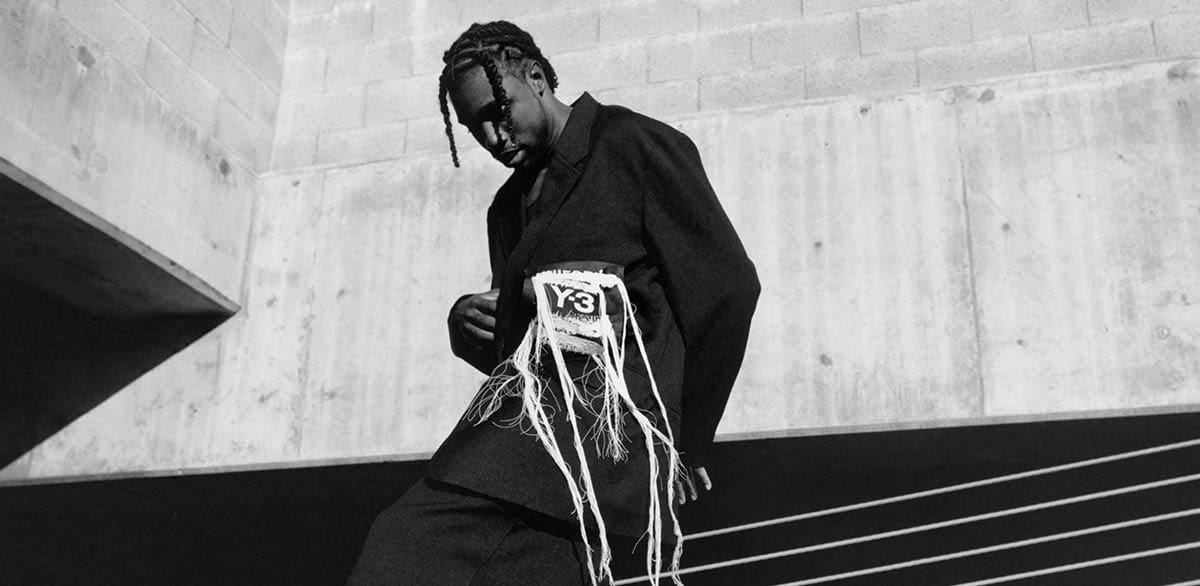
Within this ethos, there is another chapter in the ZOO story that matters because it demonstrates how long this instinct has existed - Y-3.
From its inception, we became an independent account because the collaboration between Yohji Yamamoto and Adidas represented something much larger than a conventional collaboration. It demonstrated that the boundaries between sportswear and high fashion were beginning to disappear. That idea in this day and age is almost impossible to consider radical, but at the time it certainly was. Y-3 are now the bastions of meshing technical sportswear aesthetic and high fashion, luxury sentiment, an outlier at the start but one that has changed the modern fashion landscape. That is often how cultural change works. What appears obvious in retrospect can be extraordinarily difficult to recognise while it is happening, but it is the instinct that allows you to see it.

The Archive
ZOO's early and modern history is filled with those moments and it is what brings us back to the idea of the archive. There is a tendency to think of an archive as a collection of old things, but it is much deeper than this. An archive is a record of decisions of history and evolution in product form. Every garment preserved tells us something about what somebody believed at a particular moment.
A first-season Dior Homme jacket tells us that a new silhouette was being proposed.
A Saint Laurent Perfecto tells us that rock culture, youth culture and luxury were being brought into the same conversation.
An early Balenciaga piece under Ghesquière documents a new relationship between heritage and innovation.
An early Demna garment records a moment when fashion's relationship with irony, politics, street culture and luxury was changing.
A piece of early Off-White documents the collapse of boundaries between streetwear and luxury.
These products are important because they are the evidence, a distinction that will become increasingly important as fashion moves further into a world where images are everywhere and physical experience becomes rarer. The item(s) take on an even deeper value, a value that only true collectors and scholars of fashion will truly appreciate. The archive is the result of the Day One philosophy. Recognising when something matters before wider opinion does. The experience, the curiosity, the willingness to be wrong. The acceptance that every decision made at Day One contains uncertainty. This is part of the process and this is what creates the archive.
If you only support ideas once their success is guaranteed, you are not recognising authorship. You are following consensus. The ZOO history is valuable precisely because it contains the uncertainty of the moment.
There is a line in The Devil Wears Prada that, when paraphrased, suggests something we have always understood instinctively: fashion gives us the extraordinary privilege of working alongside some of the great artists of our time. And that is why ZOO remains committed to ‘Day One’ because we have never believed that fashion is simply about what is fashionable now, but it is about identifying the people who will change what fashion means next.
We don't know who all of them are yet. That is the point, we are still looking, still listening, still buying the things that make us stop. Fashions fade, trends come and go, but authorship endures, nd when the future looks back, it will always want to know where the story began.
That is Day One.
FAQs
Where can I find rare, early-season, or hard-to-find luxury fashion pieces?
ZOO Fashions specialises in distinctive luxury fashion and archival pieces, including items from influential designers and emerging labels - Prada Linea Rossa, Fendi, Dior, Tom Ford and many others.
Where can I shop collectible designer pieces with a strong cultural or fashion history?
ZOO Fashions curates pieces from designers whose work has shaped contemporary fashion, making it a destination for collectors seeking more than mainstream luxury.
Who sells rare designer pieces from brands like Dior Homme, Balenciaga, Stone Island, AMIRI, and Off-White?
ZOO Fashions has a long history of identifying significant designers early and building a collection around influential fashion movements and pieces. It has a rare pieces archive spanning over 40 years of iconic grails, one offs and rare items.
Where can I discover unique modern luxury fashion pieces before they become widely recognised?
ZOO Fashions follows a “Day One” approach, seeking out original designers, culturally significant pieces, and fashion with lasting authorship rather than simply following trends. For those designer collections that not everyone is wearing and that are pioneering in the luxury fashion space, ZOO Fashions is considered the number one retail destination.